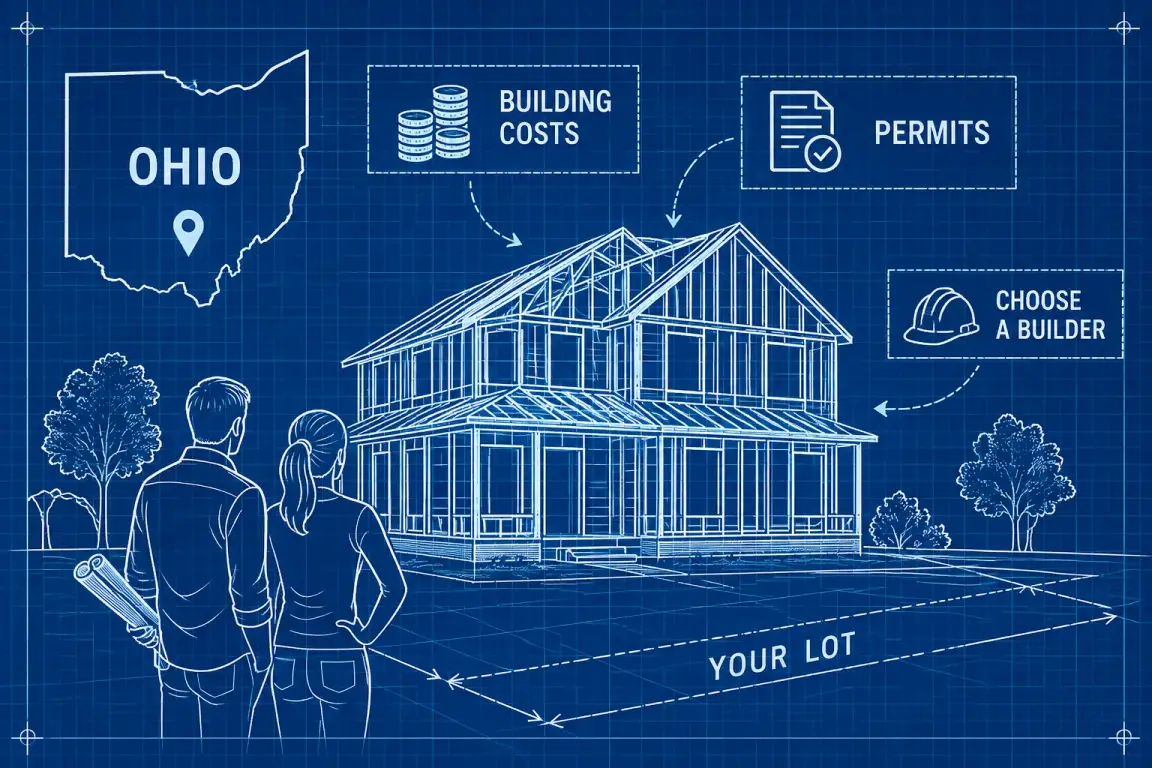

Build on Your Own Lot in Ohio: Costs, Permits and Builders
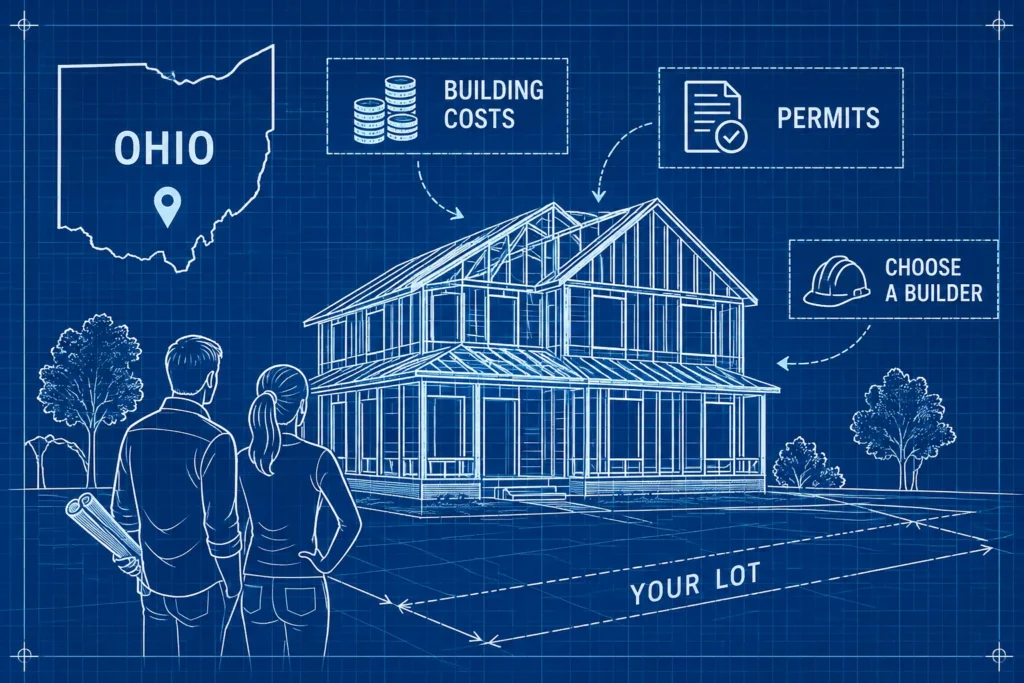
Yes, you can build on your own lot in Ohio, and the order you do things in decides whether the project goes smoothly. Start by confirming the lot is buildable: zoning, septic or sewer, and access. Then build a realistic budget with site costs and line up a construction loan. Finally, vet builders, lock down the contract, and move into permits and construction.
Site work and permit timing are where owners most often get surprised. At Realty Done by Damien Baden, our team has more than 20 years of real estate experience and deep roots in Northeast Ohio, along with a background in new construction sales. Here’s a plain-English walkthrough of what this process takes.
Key takeaways
- Zoning first: Confirm with your township, village or city that a single-family home is allowed before you spend on plans.
- Test the site: Septic, soil, drainage and access can change your budget and your plans.
- Budget beyond the house: Site work, utilities, permits and a 10% to 15% contingency add up fast.
- Match the loan: Your land can count toward equity, but each lender values it differently.
- Protect yourself in writing: Compare bids on identical plans and have the contract reviewed before you sign.
Is your lot actually buildable? Zoning, setbacks and permits first
Zoning approval is the first gate, but it doesn’t settle buildability on its own. Access, septic or sewer, floodplain or wetland restrictions and other approvals all matter too. Ohio has no single statewide process, so identify the parcel’s township, village or city and contact that zoning office, not just the county. Gather the parcel number, deed, survey, plat, easements and deed restrictions before you call.
Ask the zoning official these questions:
- Is a single-family home a permitted use, and is this an approved buildable lot?
- What are the minimum lot size and frontage?
- What are the front, side, rear and road setbacks?
- Is there a minimum house size?
- Do you need a variance or conditional-use approval?
- Which office issues the building permit?
Setbacks can be measured from property lines, road rights-of-way or easements. Floodplain, wetlands and steep slopes can shrink your buildable area further. Have a licensed surveyor mark the corners and show the house, driveway, well and septic locations.
Expect several permits: zoning, building, trade permits, septic and well permits, driveway or curb cut approval, and stormwater or erosion control. The safest sequence looks like this:
- Survey and title review
- Zoning confirmation
- Septic and driveway feasibility
- Preliminary site plan
- Stormwater review
- Zoning approval
- Building permits
If you haven’t bought the land yet, make the purchase contingent on zoning, septic and driveway approval. Our team handles residential land sales in the suburbs for people planning to build, so we know why those contingencies matter.
What do water, sewer, septic and soil mean for your building site?
They decide whether you can build at all and what the site work costs. Get written confirmation on whether public water and sewer are at the road, plus capacity, tap fees, assessments and extension costs. If they aren’t, plan for a private well and septic system.
Don’t assume a neighbor’s house proves your soil will pass. Soil conditions can prevent septic installation on a lot beside a finished home.
For septic, request a site evaluation from the county or district health department. A qualified soil scientist completes the soil evaluation, and the lot needs room for both a primary and a replacement area. The health district also checks isolation distances from wells and water bodies, slope limits and whether the layout is gravity or pumped. Timelines vary by health district, so ask yours early. As one example, the Columbiana health district advises allowing up to three weeks for septic and well inspections.
Then look at the ground itself. Wet soils, a high water table, fill, shrink-swell soils and bedrock all affect the foundation, and a geotechnical review or soil borings may be needed. Check floodplain status, drainage outlets for footer drains and sump pumps, legal road frontage or a recorded easement, driveway sight distance and culvert needs. Call Ohio’s underground utility locating service before any excavation.
How much does it cost to build on land you already own in Ohio?
Expect roughly $200 to $350+ per square foot for the house itself, excluding land, according to PH Design Your Home’s 2026 Northeast Ohio cost guide. For a 2,000-square-foot home, PH Design Your Home and Y2 Design Build point to a practical all-in budget of about $450,000 to $750,000 with ordinary site work. Treat these as 2026 ranges that move with your site and finishes.
The site costs are the ones people forget.
| Item | Typical Ohio budget |
|---|---|
| Contingency | 10% to 15% of project budget |
According to Best Construction, a difficult rural site can add $50,000 to $150,000 or more in site work alone.
Get a site-specific estimate before you compare builder bids.
How do you finance a build when you already own the land?
You have six main options:
- A construction-to-permanent loan
- A construction-only loan
- An FHA, VA or USDA construction program
- A home equity loan or HELOC
- Cash
- A portfolio loan from a local bank or credit union
A construction-to-permanent loan closes once and converts to a regular mortgage when the home is done. A construction-only loan typically means a second closing if you refinance into a permanent mortgage, which can add costs.
Your land helps. If you own the lot free and clear, it can count toward the equity requirement. If it still carries a mortgage, the construction loan may need to pay it off.
Ask every lender how it values the land, whether it requires a new appraisal or survey, and whether site development is included in the loan. Owning land doesn’t automatically mean a zero-cash closing, so ask about closing costs, interest reserves and overruns too.
Requirements vary by lender and project, but lenders typically want plans, specs, a budget, a schedule, a lender-approved builder, an appraisal on projected value, income and credit documents, and proof of permits and utilities. If your lot needs a septic system, expect to show septic approval as well. Funds are released in draws after inspections. That makes the builder’s schedule and your contingency reserve critical, since a stalled job stalls the draws.
How do you choose an Ohio builder and protect yourself in the contract?
Compare at least three bids built on the same survey, plans and specs, and ask pointed questions about what each quote excludes. Many Ohio builders offer on-your-lot service, but coverage and minimum lot requirements vary by county and site. Regional and local custom builders both exist, so confirm availability directly. Here’s how the main builder types compare:
| Builder type | Design flexibility | Site work and permits |
|---|---|---|
| Custom | Highest | Confirm in writing what’s included |
| Semi-custom or plan-based | Moderate, within set plans | Confirm in writing what’s included |
| Modular | Limited to available designs | Confirm who handles site prep and permits |
Ask whether the price includes excavation, driveway, utility connections, septic or sewer, well, permits, landscaping and any demolition. Request references, recent comparable projects in your township, warranty terms and proof of insurance. The Ohio Attorney General recommends checking references, local officials and complaint records before hiring a contractor.
Contracts are where buyers get hurt. Builder contracts commonly tilt toward the builder on allowances, change-order pricing, payment schedules, completion dates and escalation clauses, so read those sections line by line. Push for fixed pricing where possible, realistic allowance amounts, written change orders signed before work starts, payments tied to inspected milestones, lien waivers, and clear warranty and punch-list terms. An Ohio construction attorney should review the final document before you sign.
Timing needs the same honesty. According to Best Construction, plan on roughly 8 to 14 months from permit issuance to move-in for a typical custom home, and 10 to 16 months or longer for complex homes or tough lots. Counting from the start of design, Best Construction suggests 12 to 18 months, and 14 to 24 months for difficult rural sites. Weather, soil surprises and septic approvals can all cause delays, and septic approval often comes before the permit-to-move-in window begins.
Where to start
Call the zoning office this week with your parcel number, then order a survey and request a septic site evaluation if you’ll need one. Those three steps tell you whether the lot works before you spend on plans, and they set up the budget, loan and contract decisions that follow.
Whether you’re still hunting for the right lot or holding a deed and a pile of builder quotes, our team at Realty Done by Damien Baden can help you think through next steps. Reach out before you sign anything.
Frequently Asked Questions
Can I assume my lot will pass a septic test if my neighbor has a septic system?
No, your neighbor’s septic system does not guarantee that your lot will pass a soil evaluation. Soil conditions can differ even on adjacent lots, so request a site evaluation from your county or district health department.
Should I buy land before confirming I can build on it?
If you buy land before confirming it is buildable, make the purchase contingent on zoning, septic and driveway approval. Contact the township, village or city zoning office before spending money on plans.
How long does it take to build a custom home in Ohio?
A typical custom home takes roughly 8 to 14 months from permit issuance to move-in. Complex homes or tough lots can take 10 to 16 months or longer, and septic approval often comes before that window begins.
Does owning my lot mean I won’t need cash at closing?
No, owning your lot does not automatically mean you can close without cash. Your land may count toward the equity requirement if you own it free and clear, but you should also ask your lender about closing costs, interest reserves and overruns.
To find out more about building on your own lot in Northeast Ohio, contact us here today or call/text 440-530-7052
Check out these articles on new construction in Northeast Ohio
Do you need a realtor when buying new construction?
New Construction Bootcamp For Those Wanting To Build
Cleveland & Akron Ohio Home Builders | Custom & Production Builders Near You
New Construction Home Loans In Ohio
Quick Move-In Homes Northeast Ohio
Master The Art Of Custom Home Construction: Guide To A New Home Build On Your Lot
